
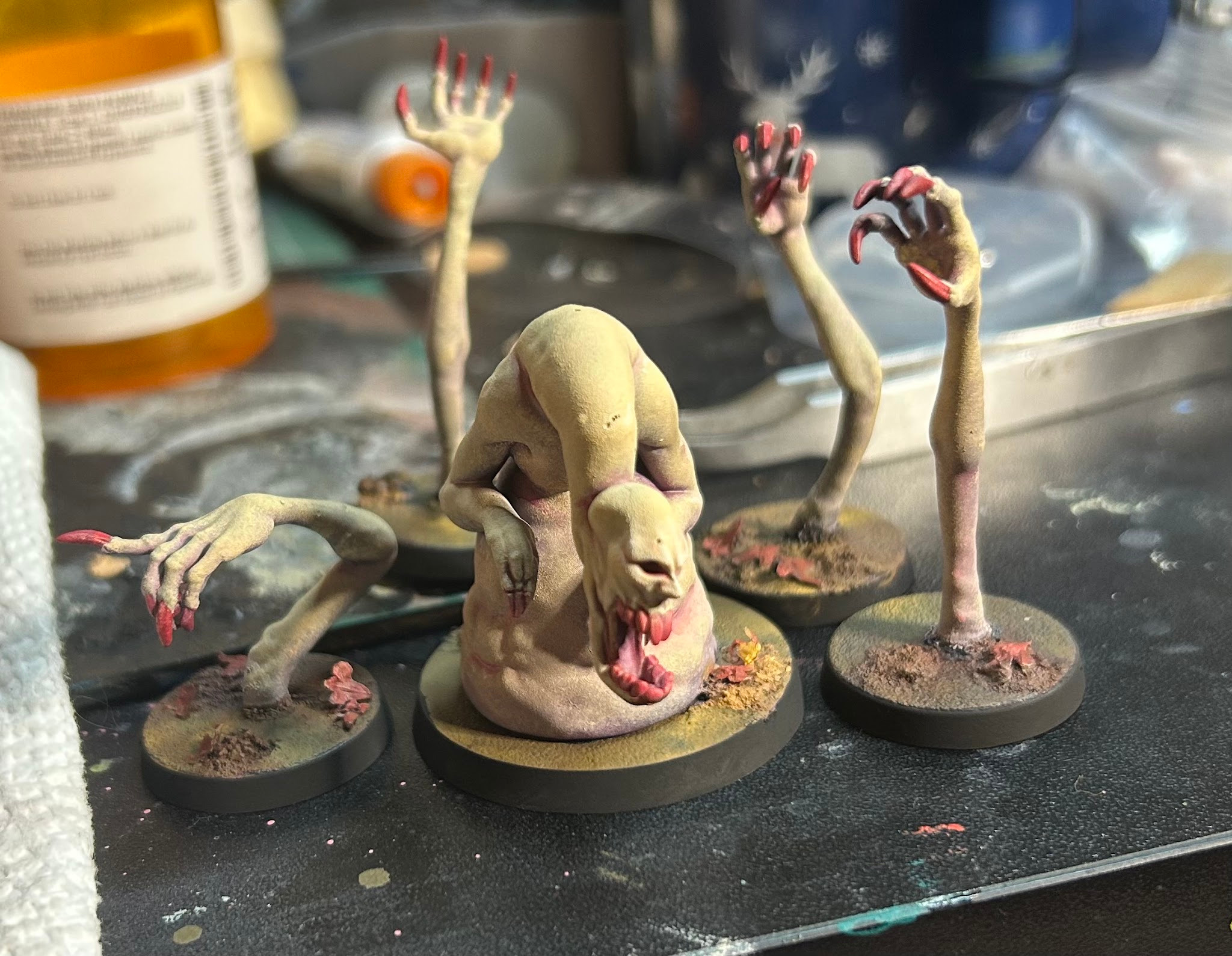
Hobby Blog #1
On Blogging
I’ve not really done blogging before so you’ll have to forgive any faux pas I commit against the format. I liked microblogging back when twitter was twitter, but I haven’t actually done much but post my minis and repost things since before Covid so I was feeling nostalgic for writing down the things I think without a specific topic in mind.
One of the things that I learned in college is the value of journaling. Being able to write down what you think as you think it and then reflect on it later is valuable. You can look back on a moment in history where you captured what you thought and decide if you still think that way, without someone telling you what you thought.
Whether or not you think my thoughts are interesting is between you and god. I think I have likes and comments turned off, and if I don’t I will soon. If you want to respond, write your own blog. If it’s interesting, I’ll read it.
On Finishing Trench Crusade
Or Tench Cuesade, If You’re Hip With It
I finished my Heretic Navy early in the month. I think it’s the project that I’ve finished with the longest calendar time between start and finish. Obviously I have 40k armies that I’ve been working on longer, but those don’t feel like one project, instead a series of smaller projects that all contribute to the same list if that makes any sense. This heretic navy project was one project. About 12 options for troopers, anointed, and elites that make up my heretic navy. Finished right in time for official models.
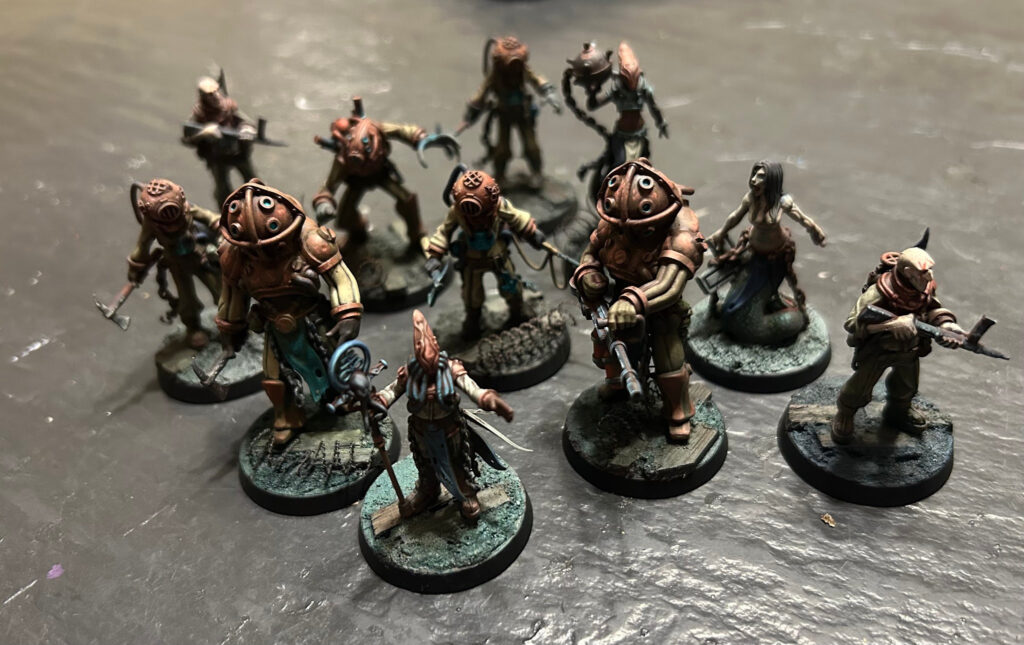
I like the sculpts I picked. They’re by Matt Difa and I think he’s one of my favorite sculptors working currently. He has enough detail for my hobby time to chew on, but keeps a sort of exaggerated cartoony proportion that makes the minis a blast to paint. Lidless Joe and Tetsuork are my two favorites so far.
Trench Crusade as a game is quite good. It plays fast and the blood tokens are an elegant way to track damage while retaining the “Anything can die if you get lucky” feeling. It feels like a more modern adaptation of the classic campaign style games like necromunda and mordheim which tracks given who worked on it.
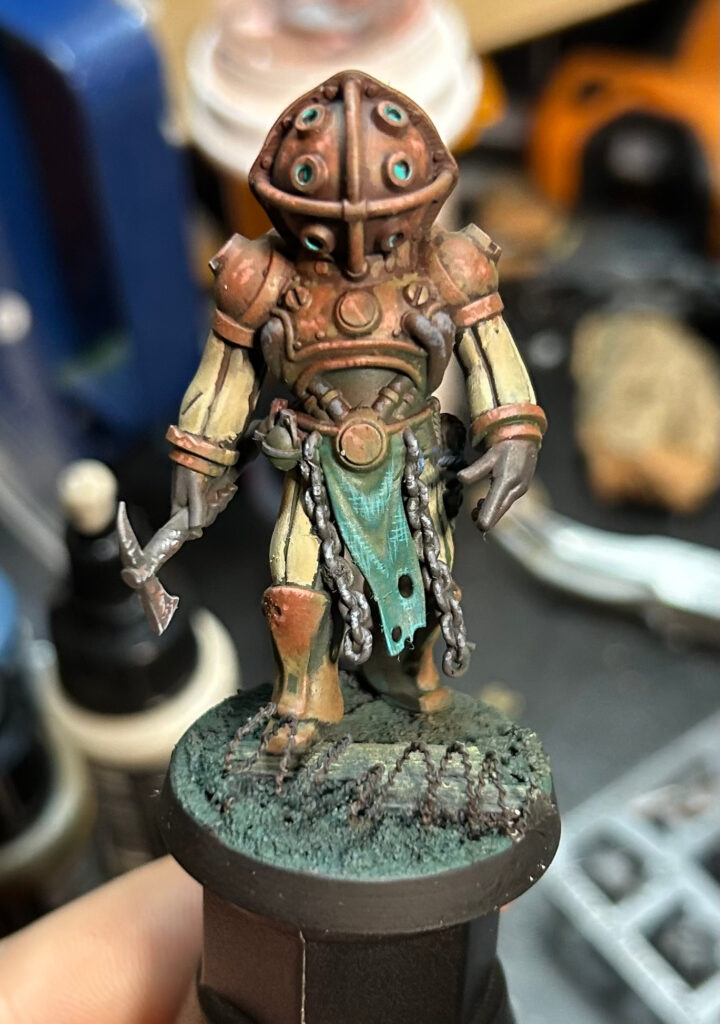
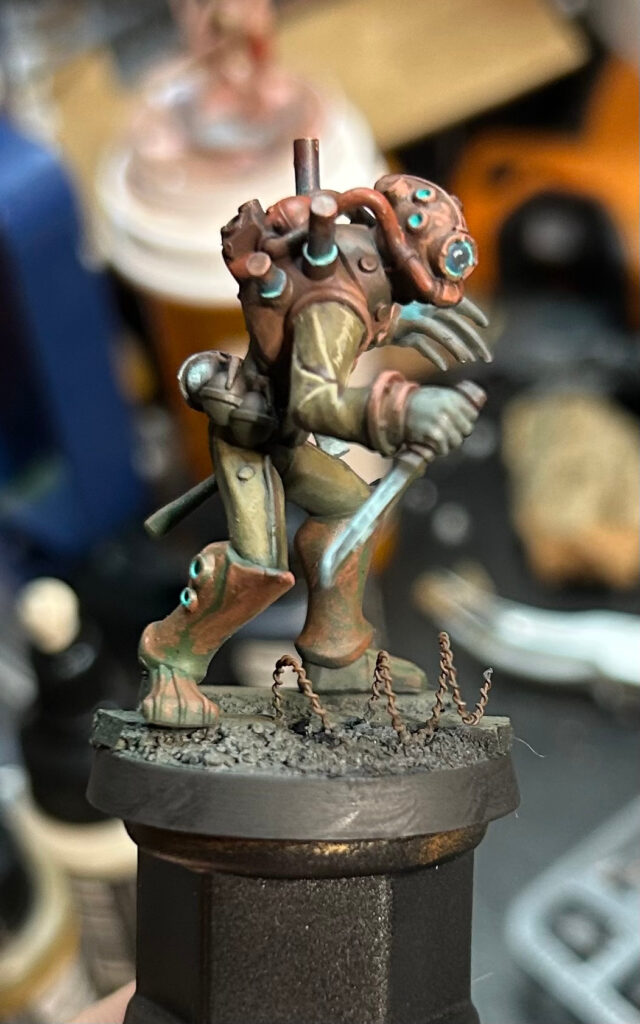
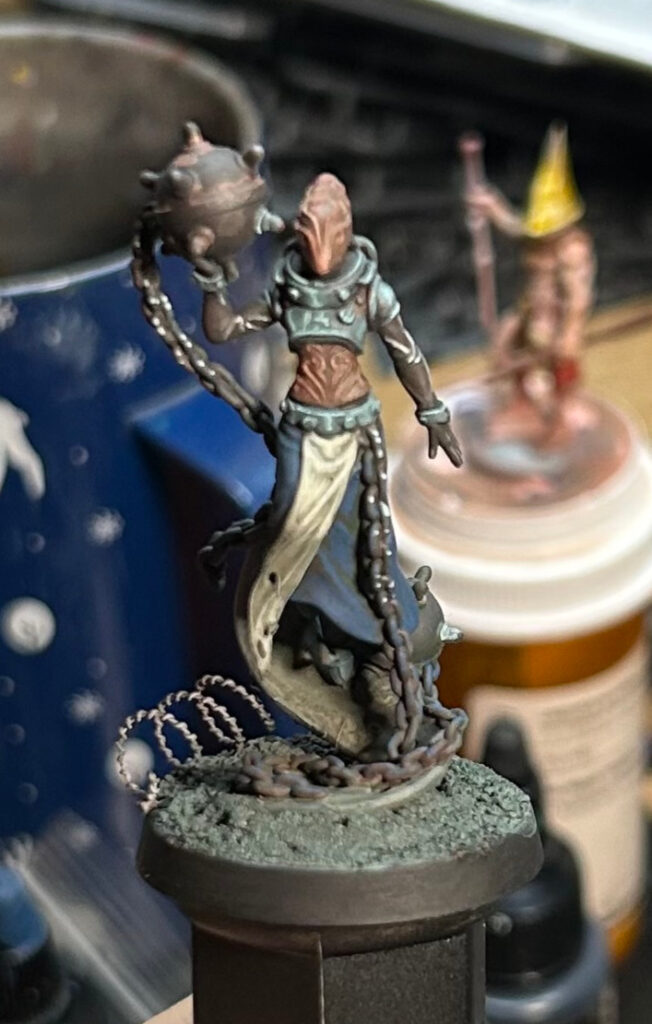
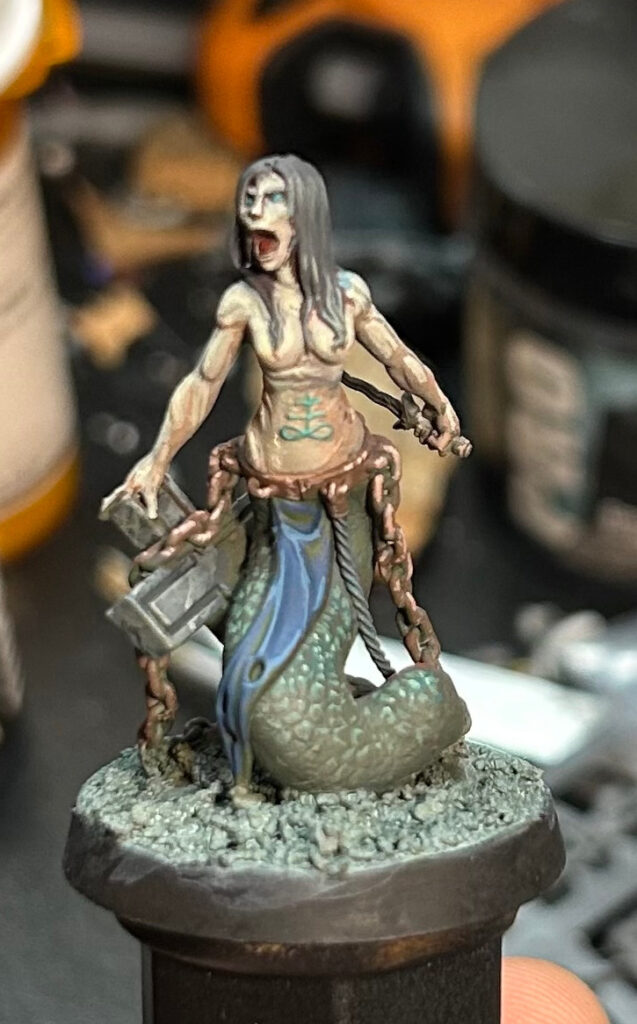
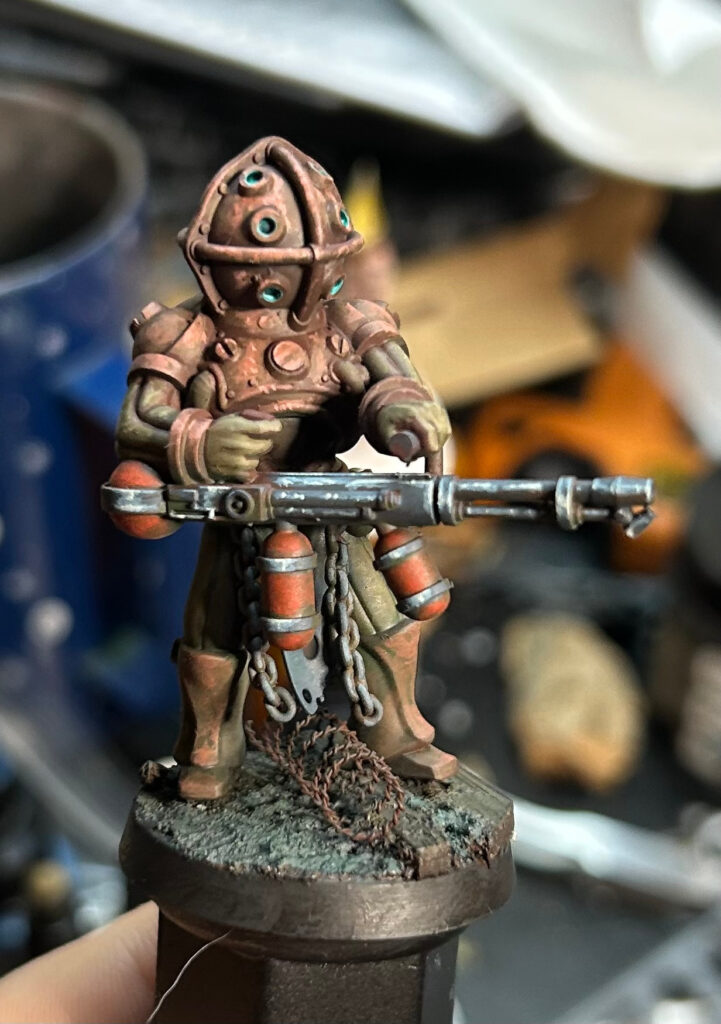
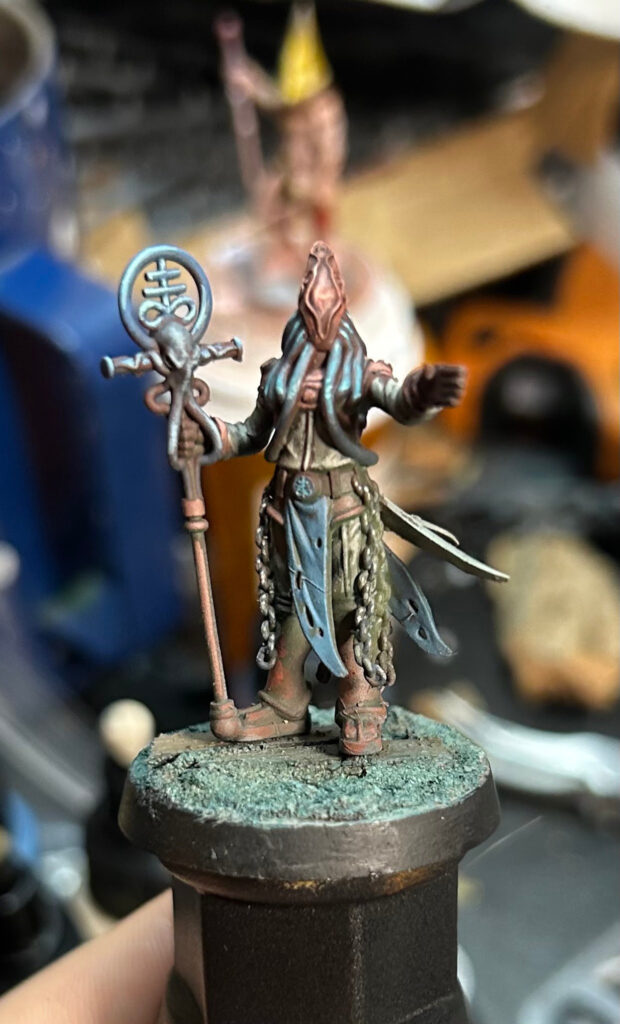
I painted these models in a limited palette pictured here. I basically stole Ninjon’s speed painting method using the deck of many colors but instead of using the deck, I just, grabbed a piece I thought had interesting colors and picked those out. This is how I did my necropolis warband last year as well and it’s been how I paint most of my skirmish bands since he explained the Idea originally.
It was nice to have a box of minis that I could kinda break out, turn my brain off and just hammer away at after having figured out how the colors worked and what would be painted how. I’ll have to figure out what the next project will be to replace it.
I have started on my next bit for these guys:
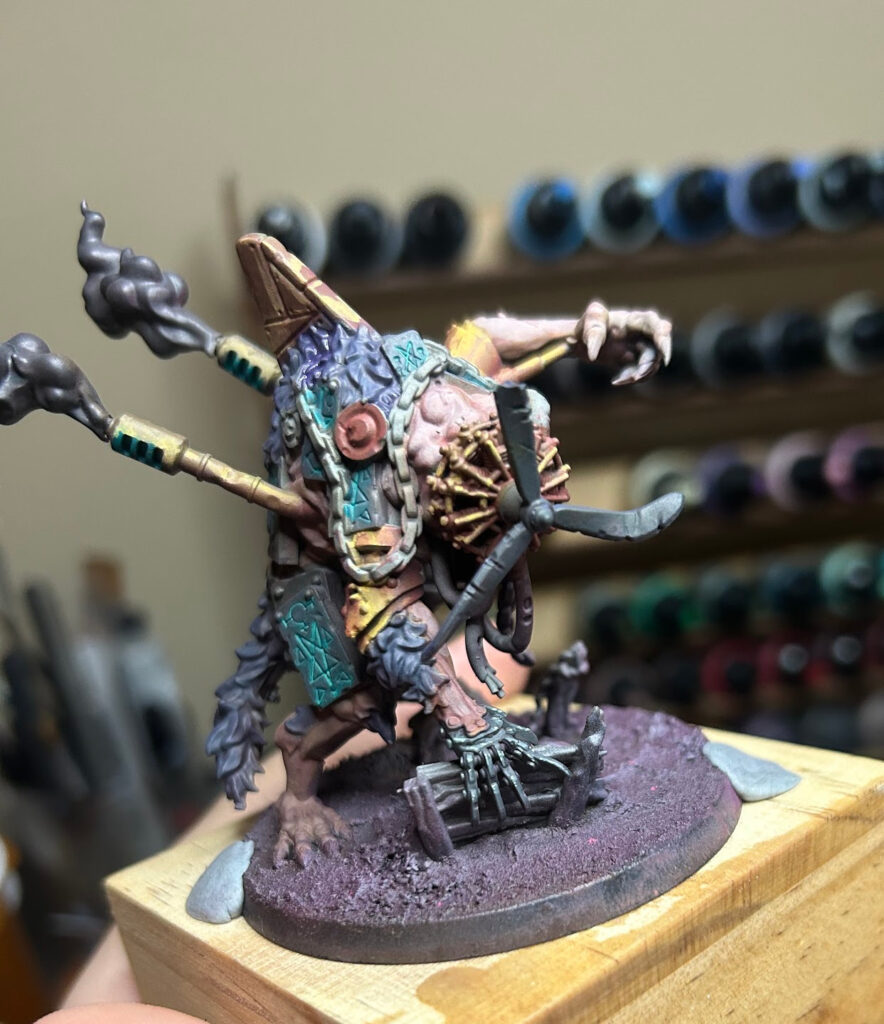
I wanted to paint this propeller wolf sculpt and so I’m going to. I did an original color sketch and then overwrote it and went back on it, and I stopped using my limited palette which might be a mistake. I’m also not used to painting minis this big so we’ll see how it turns out.
On Painting the Same Model More than Once
Haven’t I Done This Before?
Something I was thinking about, from the perspective of a display painter or just a regular hobbyist, is how many people paint the same model more than once? I originally thought about this when I painted the priest of onslaught for my brother for christmas, after having painted him as a bust for resin beast and as Kain for Judgement Eternal Champions. This is not, the only model that I’ve painted twice however and not why I thought about it.
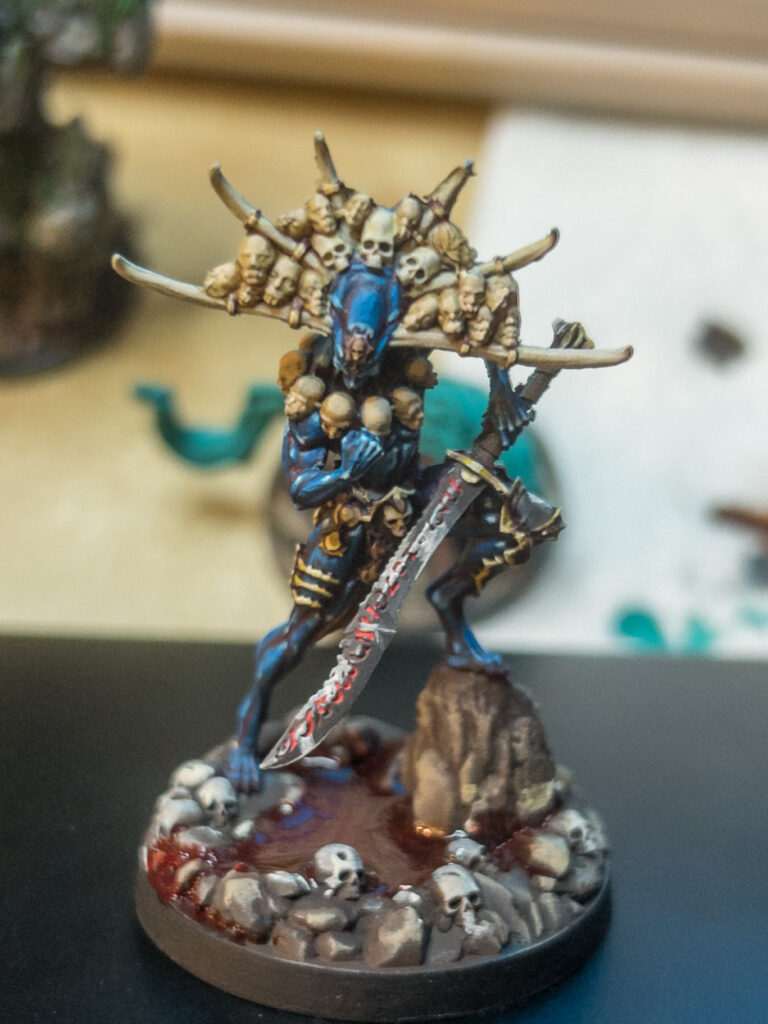
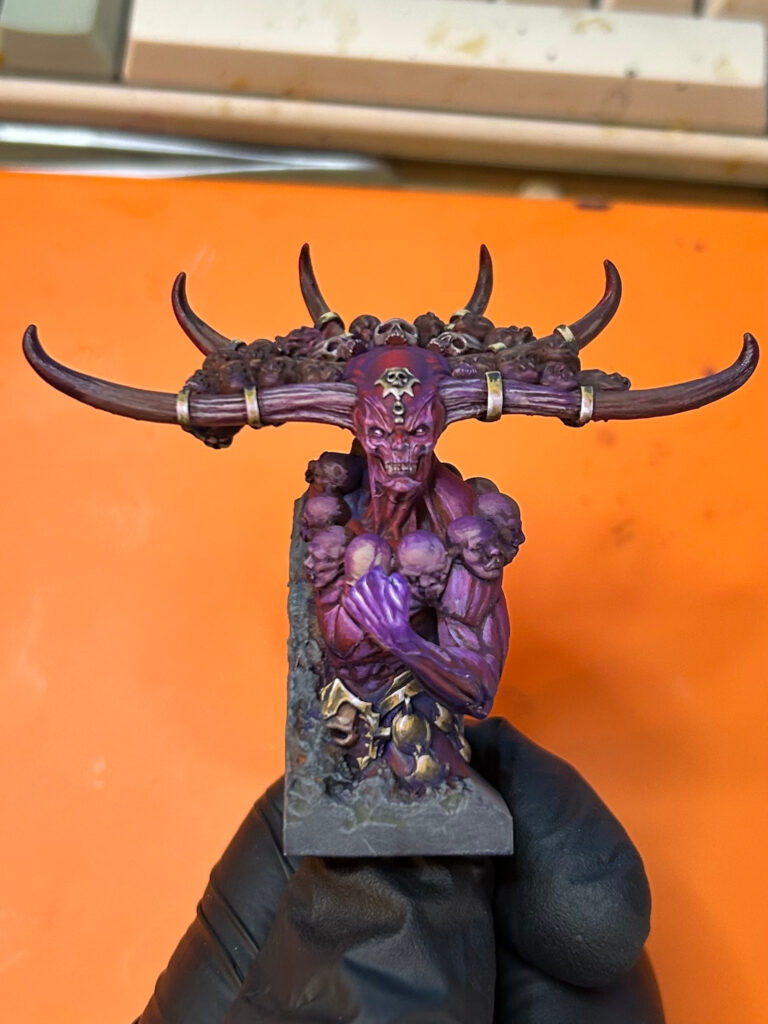
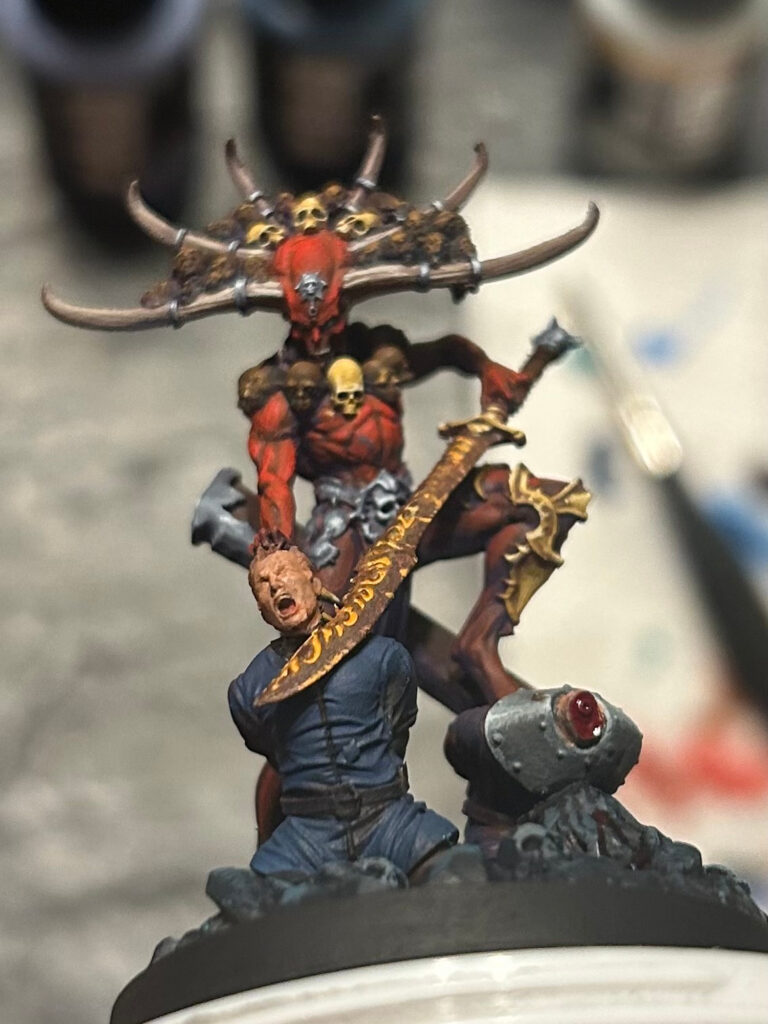
Since it’s almost October, I got out my Halloween Knight as I was deciding to paint him again as a display model. The one on the right here:
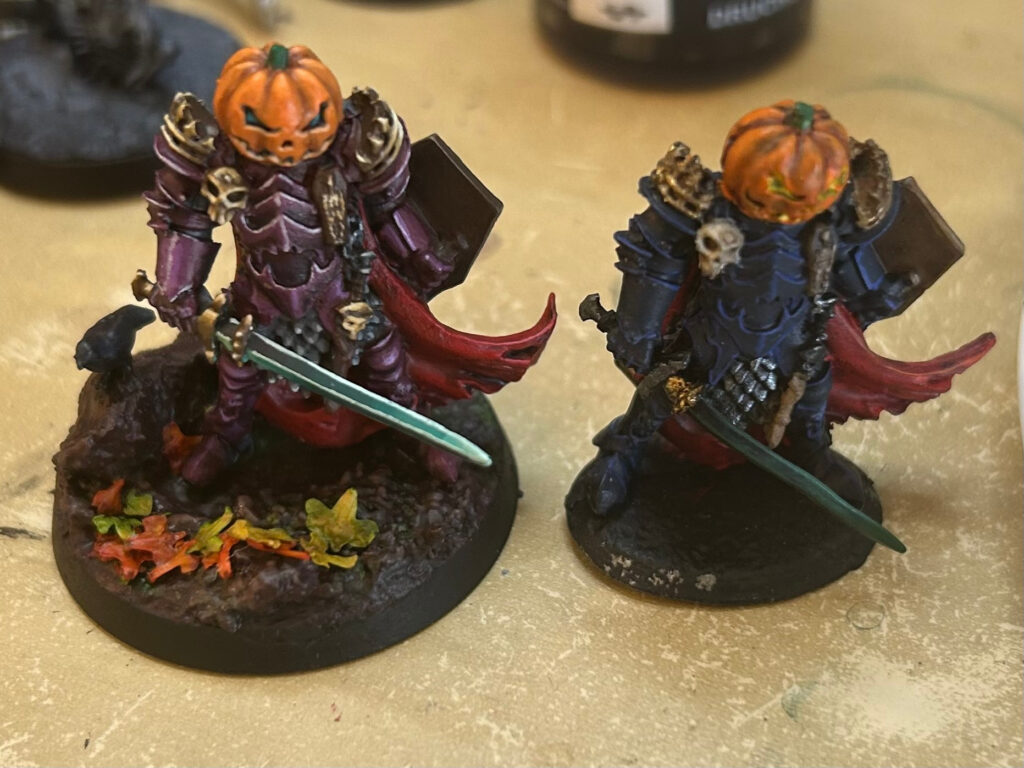
After having painted him twice. He’s one of the first minis I painted to the best of my ability at the time, and I’ve done so again, and now, plan to do so again.
I know a lot of display minis are someone’s first time painting that specific sculpt, and for army painting you’re probably machining through the same sculpt 3 -10 times, so I find myself at a weird in-between where I’m painting a display miniature like I’m an army painter. I feel like knowing the sculpt can be helpful for getting a better result, but I also feel like it’s possible you fall into the same trap over and over, painting the mini with the same flaws as when you first did.
Would my Halloween knight be better if I didn’t feel the need for him to have purple armor, a red cloak, and a green sword? Maybe! But will my nostalgia for the figure permit me to paint him any other way at this point? Who can say! I’m going to try and paint this guy up to the nines again and maybe that means no purple.
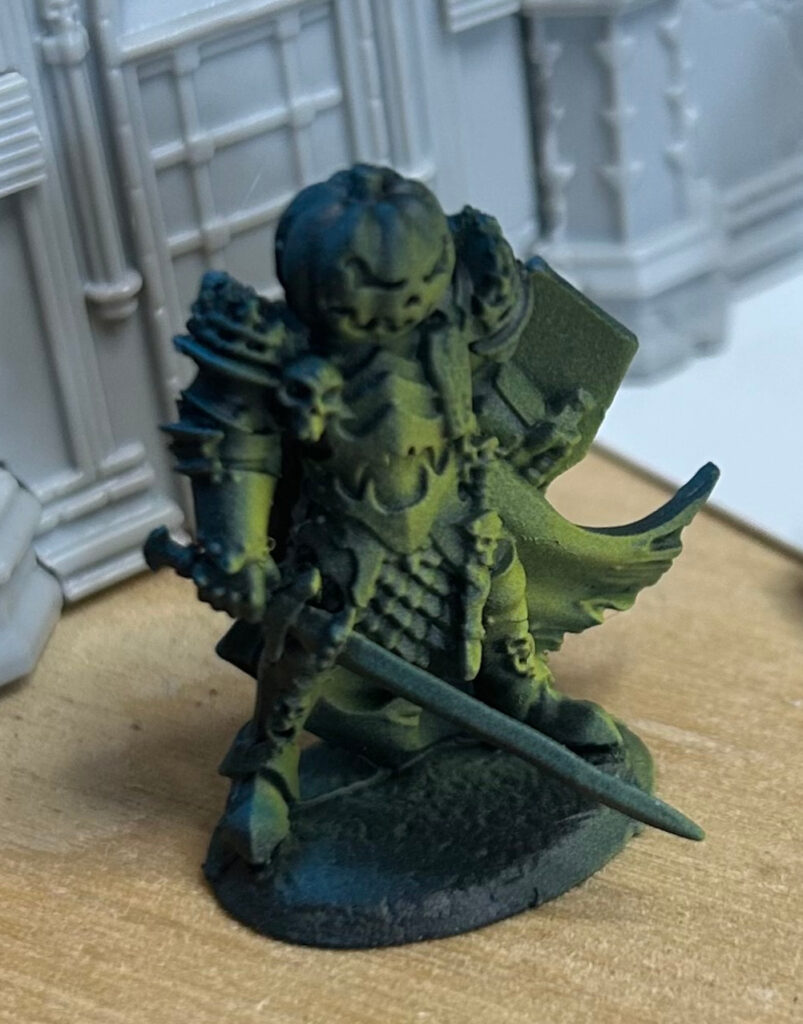
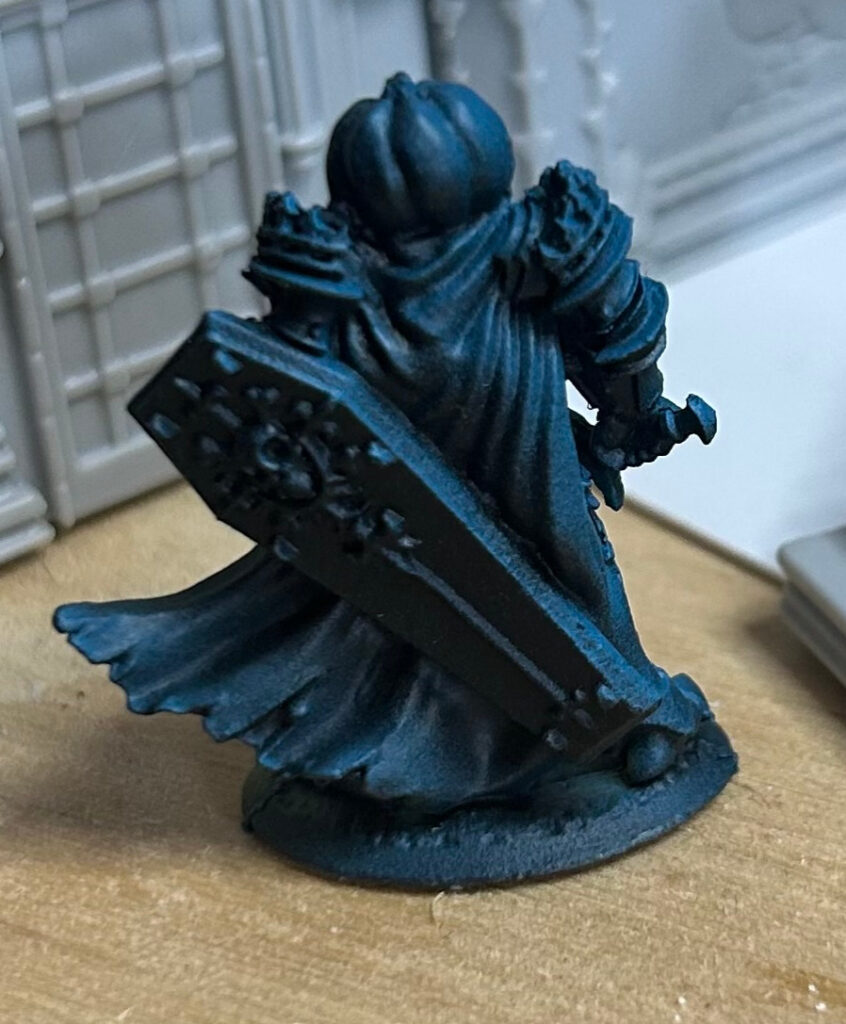
I want to convey the narrative of him hanging out by the fire under the cold moonlight. Just approaching a group after they’ve just lit a bonfire to camp out for the night. I put a very basic light sketch on him with the airbrush and I think I’m going to go in with ice yellow and sky blue brushwork for a sort of en grisaille and refine it before glazing on some shadow colors and going all in on him.
On Tone Pro
James’ New Miracle Juice
Tone Pro is sweeping the hobby scene and coming to stores near you to try! I got hands on with it at the end of the month and with an upcoming October release I think I could say something about it, and it’s my blog so I will!
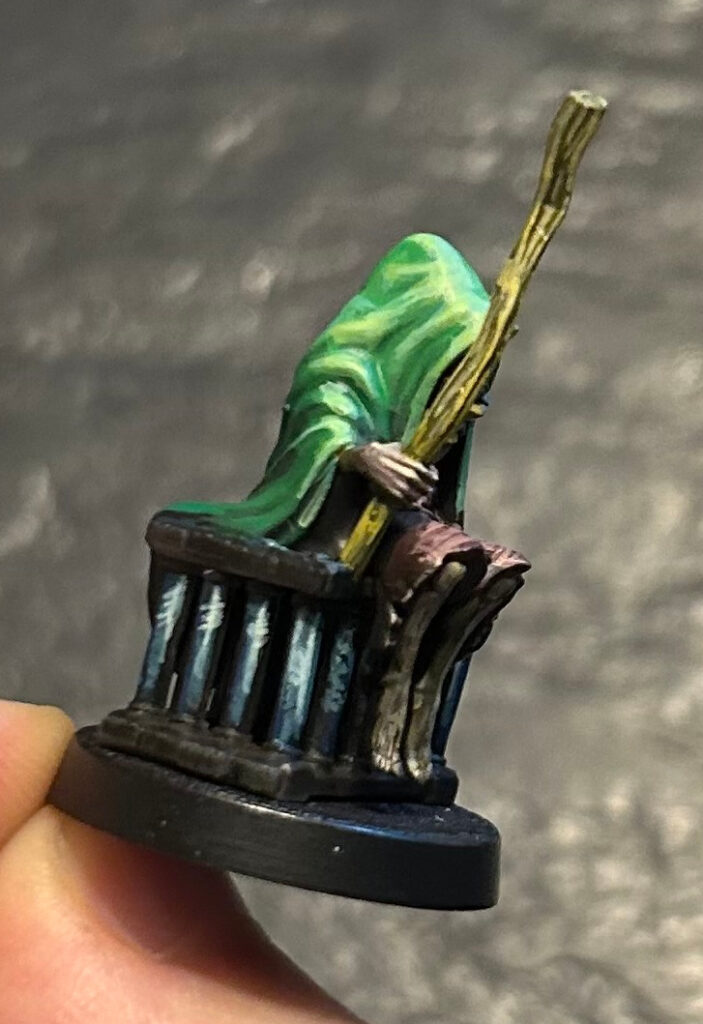
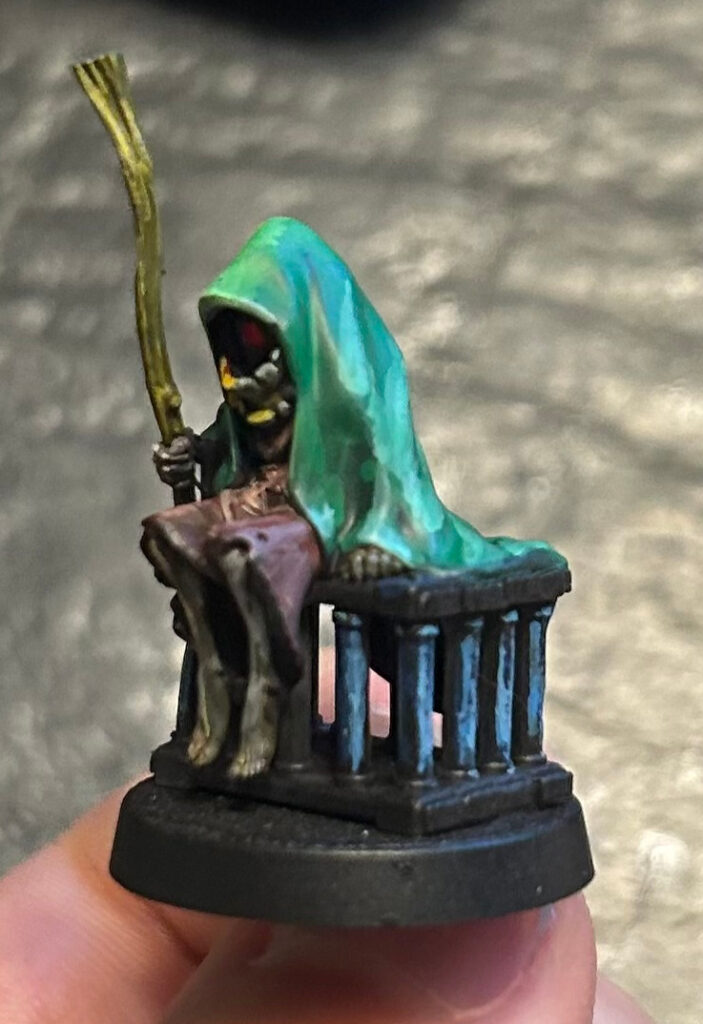
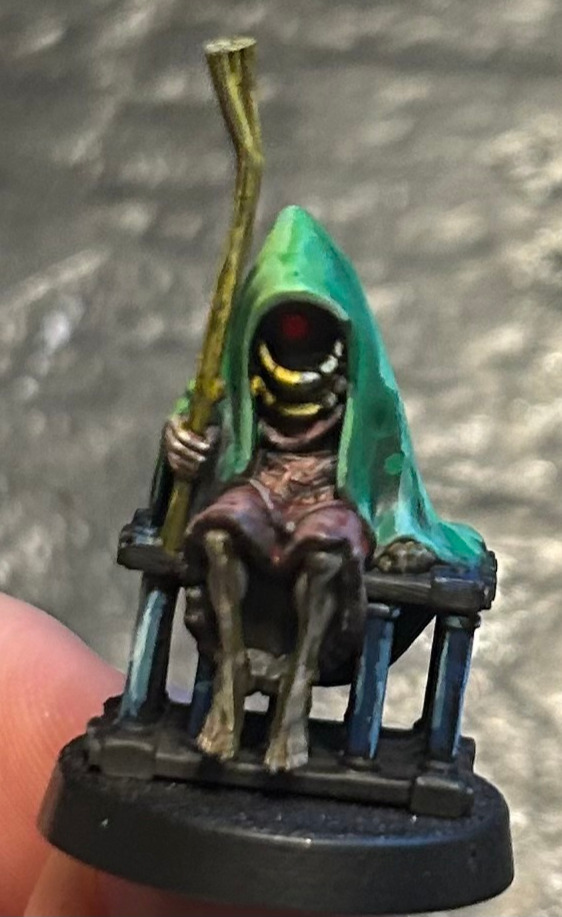
I painted this sculpt of a poe collector by B-Team Minis since I wasn’t painting it in a GW. I didn’t use the Pentad system because I wouldn’t for the Army Painter and I believe color theory was a hoax made up by Pink Floyd to sell more copies of Dark Side of the Moon.
I think Tone Pro is the best paint GW has made, which is a bar that one would hope any paint brand could clear, but GW hasn’t yet.
Is it Better than Pro-Acryl, P3, Fanatic, Vallejo? Of those four it feels most similar to Pro-Acryl which I’ve been using almost exclusively for the last 18-ish months. It’s a thin paint that has good coverage and high pigmentation that glazes down really well. It has a long working time on the model when you take it right out of the pot. The big difference is its self-leveling properties. I couldn’t get it to leave the raised brush strokes that I sometimes get when working with light colors at a layer consistency for the Fanatic / Vallejo / P3 crew.
It’s not the miracle juice one might make it out to be in their youtube video. I couldn’t for example get the white to cover straight over black, even working straight out of the pot, which is something they advertised. It is also something that you shouldn’t be doing. Vincey V has a good video on painting white which I’ve used for my T’au and for some robots for steel rift. It uses very very little pure white which makes sense given you want to have a shadow color. The other places to use it like in plasma glow and lightning etc most whites work fine, but a white oil paint or a white acrylic with Newsh is what I prefer.
If you are a hobby painter who wants to get into display and this is available it’s a good option, but Pro Acryl, P3, Army Painter Fanatic, and new formula Vallejo are also good paints to get as well, and might be a little less painful on the wallet.
I also know some people swear by artist acrylics so to each their own.
You may have noticed I haven’t made comparisons to AK, and that’s because it is unequivocally better than AK. GW hasn’t used AI to generate their box art, or the death of real people in the Ukraine or the actual factual holocaust to sell their paints. So, if you’re using AK and considering switching off, maybe this is a good excuse. I wouldn’t blame you.
On Returning to the Necropolis
He’s Dead Jim
We’re so Back. Look at my collection of dubious little freaks
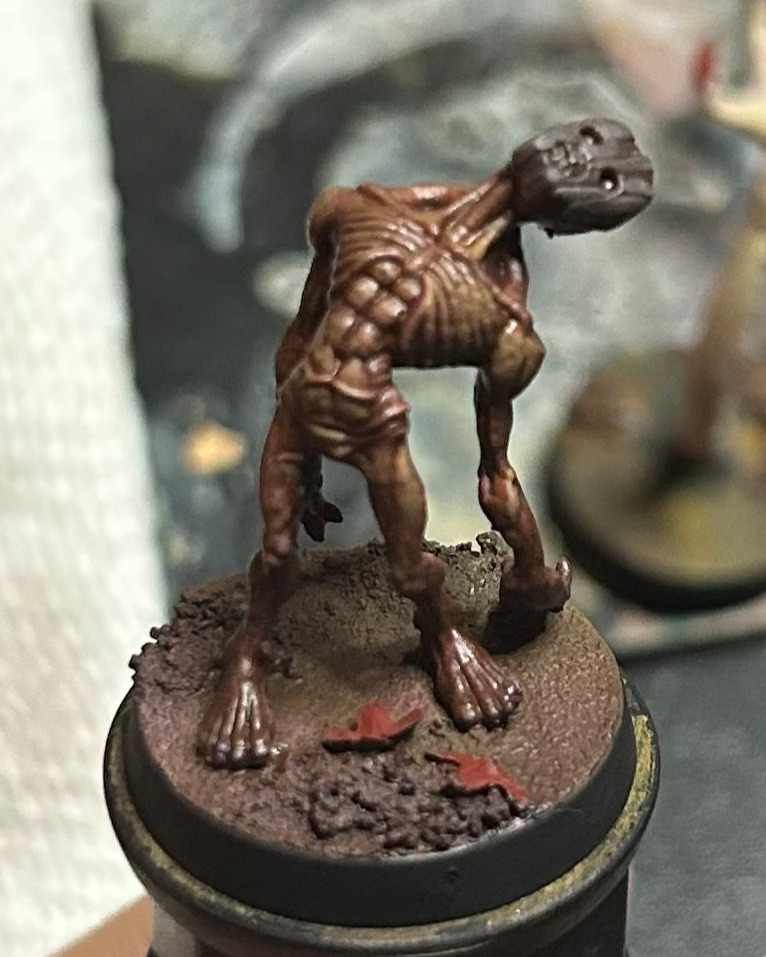
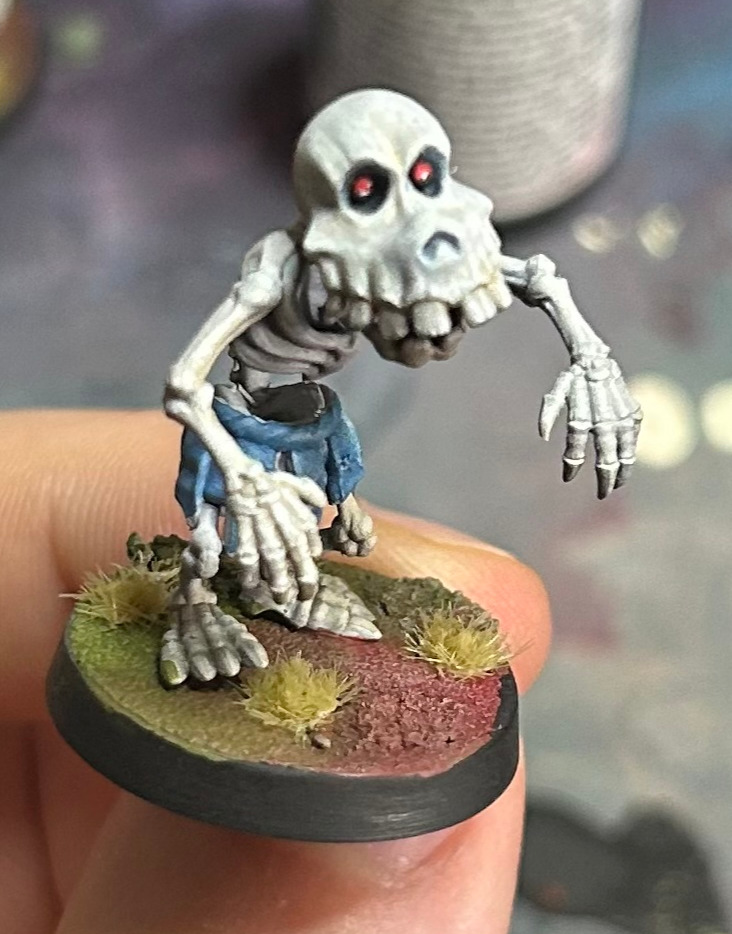
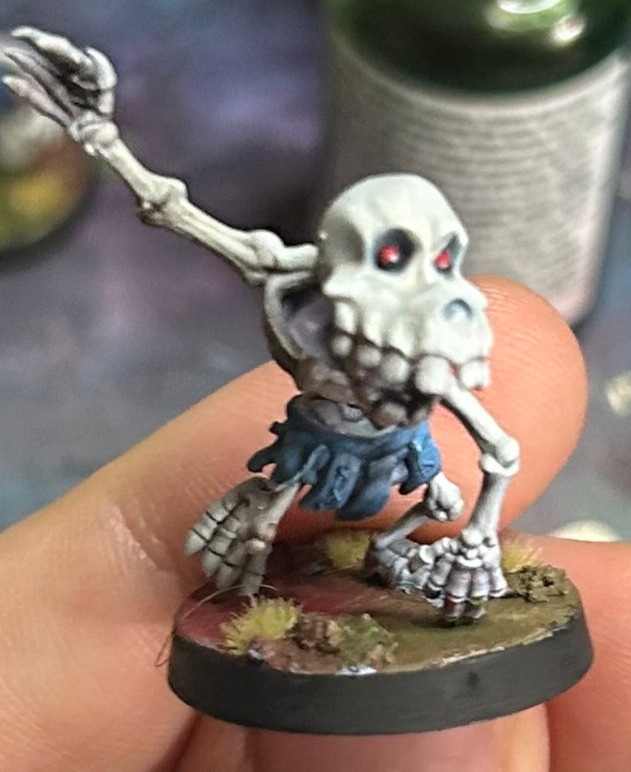
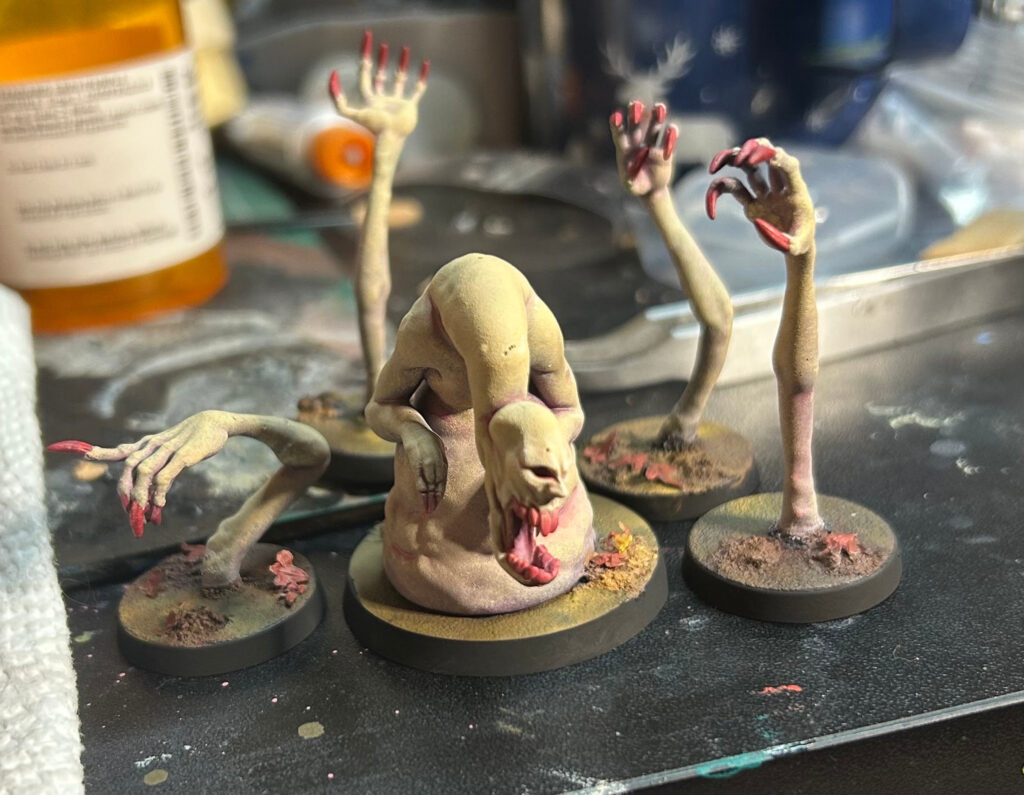
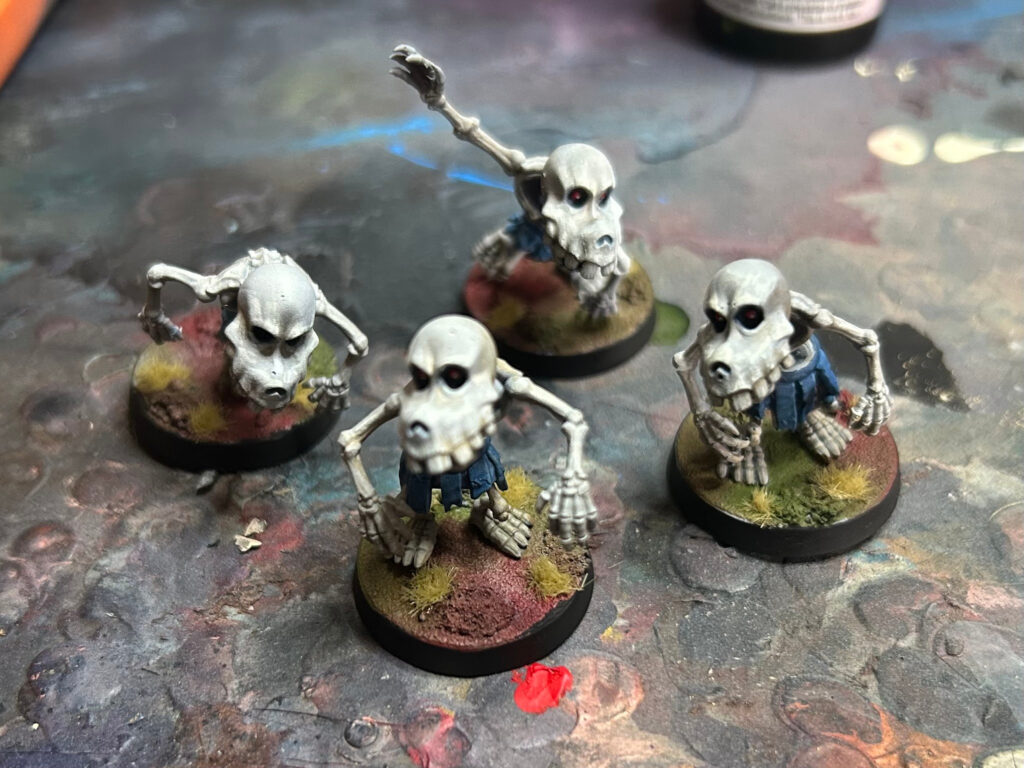
If you aren’t paying attention to Necropolis, it rocks. What if Mordheim was only undead.
It provides a home for every undead mini you own to get some love in a skirmish combat game. Last year I used it as an excuse to paint up Askurgan Trueblades (Below) that ultimately went on to inspire my golden demon entry. This year I’m using it as an excuse to paint up a bunch of B-Team Minis guys to get a hit of some sweet Zelda nostalgia (above). It’s a type of game that’s laser targeted at my interests specifically. Skirmish combat with weird freaks and Undead.
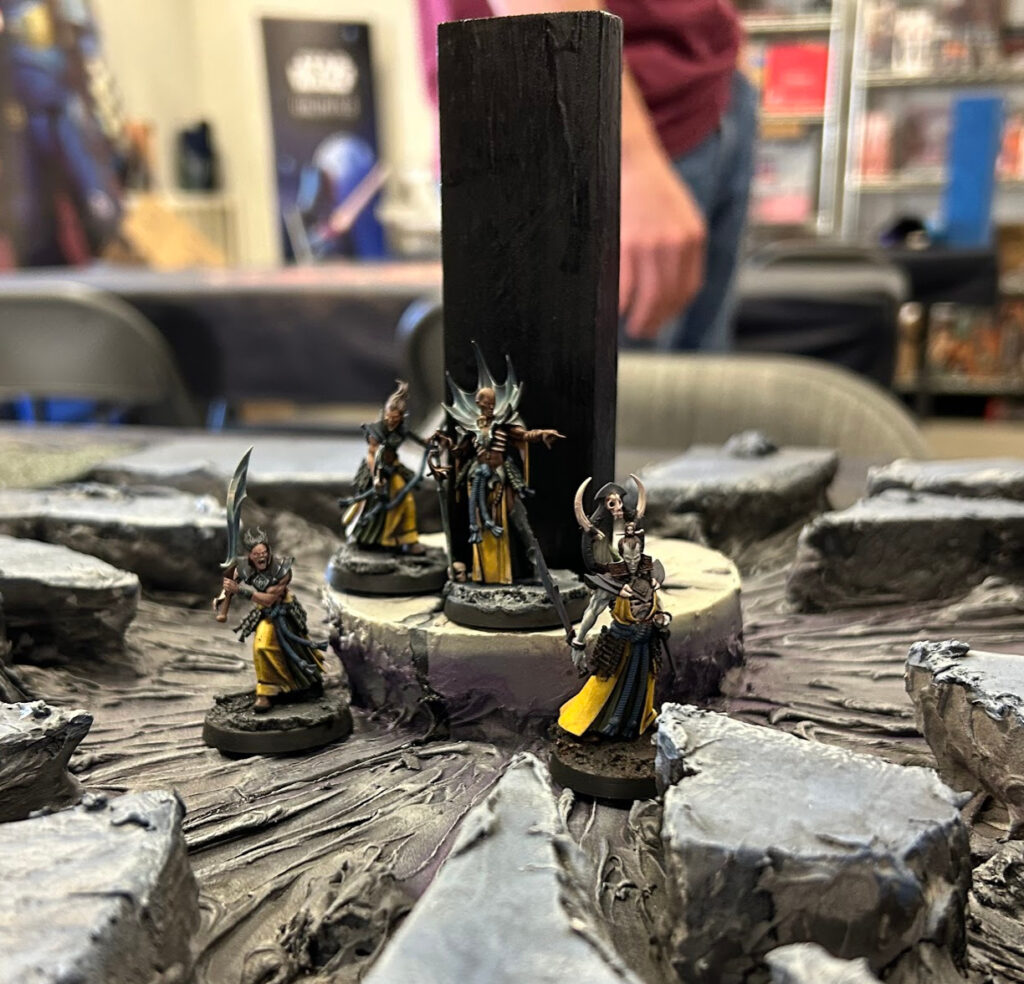
Additionally the feeling of playing a game where minis die super fast and also pop back up a dime a dozen is a blast, and with Necropolis’ quick and easy combat resolution and low model count it doesn’t turn into a slog with longer games.
Additionally it comes with an excuse to build a board, with it being designed for 16”x16” diorama skirmish combat.
On Building a Map
Since minis games often don’t prescribe terrain layouts (with the ones that I can think of being Games Workshop Games (40k, Indoors Kill Team) and hex based game Judgement) the burden of Map design falls on players and TOs. Something that is a core part of Video Game Design that is entirely outsourced in minis game design.
Building a map is interesting. As someone who made Team Fortress 2 Maps in Hammer as a teen and studied PVP FPS map design for a semester in college, I feel like a lot of miniature skirmish games oops their way into uneven level design. Part of this could be things that don’t transfer over between mediums and part of this is likely that the people setting up the terrain literally just don’t know.
Like there is certainly some overlap between people who have played on Nuketown and people who play 40k, just statistically that feels like it has to happen, but I think a much smaller percentage could explain why Nuketown works and how that could be transferred to 40k.
For a crash course, the short answer is Nuketown has three “lanes” that divide up line of sight. Most of the canon good Call of Duty Maps are built this way. The reasoning being that it breaks up line of sight into shorter subsections allowing for medium, long and short range combat. In CoD this is useful because it allows for the run and gun gameplay Ball and Gun gamers crave, but for minis games where shooting can become dominant, it’s useful to think about these things when laying out terrain. Maintaining the lane design in your layout can be worthwhile in helping to chill out the dominance of ranged alpha strike strategies.
To Generalize, Nuketown uses solid walls to break up line of sight from different parts of the map. This means that instead of being a great big open field where a scrum can happen, there are several smaller intersecting areas of impact for a single player, and moving between them is part of the strategy of the game.
Nuketown uses this to make a scenario where players are engaging with parties between 1 and 3 other players at a pace that is frantic enough to be fun but not overwhelming. By controlling sight lines they limit the amount of locations that a party is able to control from one location. The variety of these sight lines allows for different weapon types to engage in different locations but balanced in a way that one doesn’t become dominant.
Nuketown would probably make for a great Kill Team or ‘Munda Map, but not a great 40k map because it’s too cramped for vehicles or larger squads to engage. The ideas however are useful. Thinking about breaking up line of sight so that melee or other short range squads can move into position without getting blasted by whatever T’au or Imperial Guard gun is overtuned. Additionally you can use the cramped nature to allow for infantry squads to move about through locations that heavy armor can’t get to.
So What am I Thinking About When Designing a Map for Necropolis?
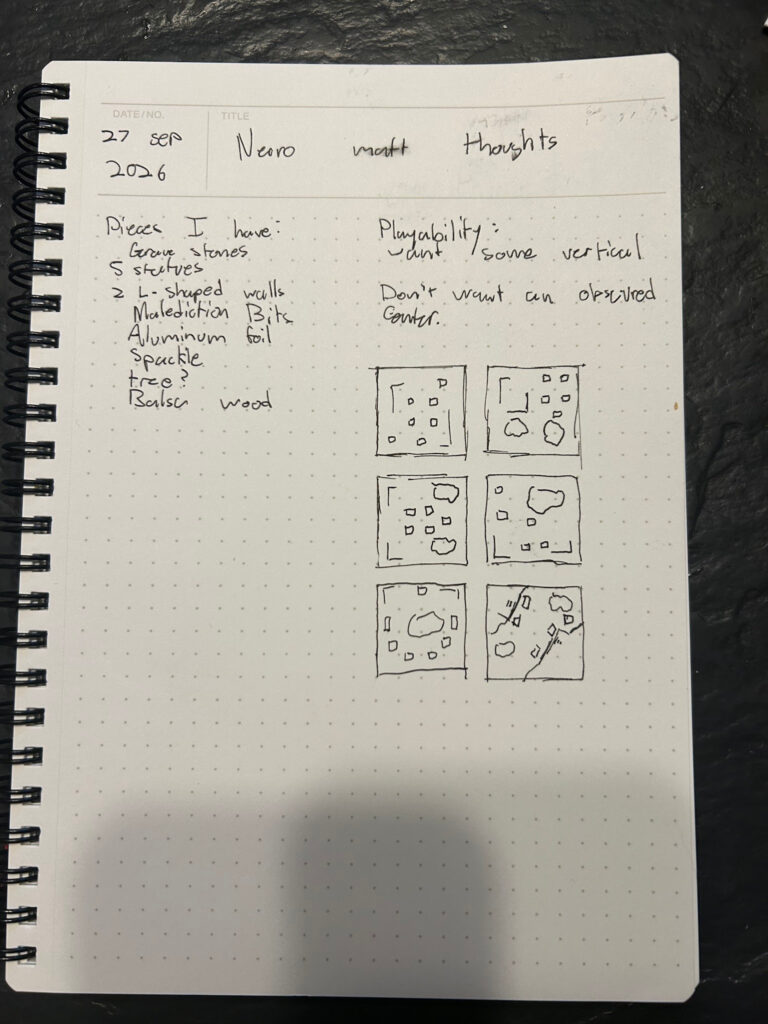
Luckily I had the foresight to proper write it down. I took a picture of my journal page where I did my initial planning. To start, I outlined what I had and what I could build. Then I wrote down some goals (under Playability on the right hand side) for how I wanted the map to behave with a desire for verticality and an open center of the map.From there I started sketching out some ideas. I drew four little squares and put some things on the map that I thought would be interesting. When none of them spoke to me I put down some more and that’s when the idea hit me to make a raised center surrounded with some exterior bits walled off by the plastic walls I had.
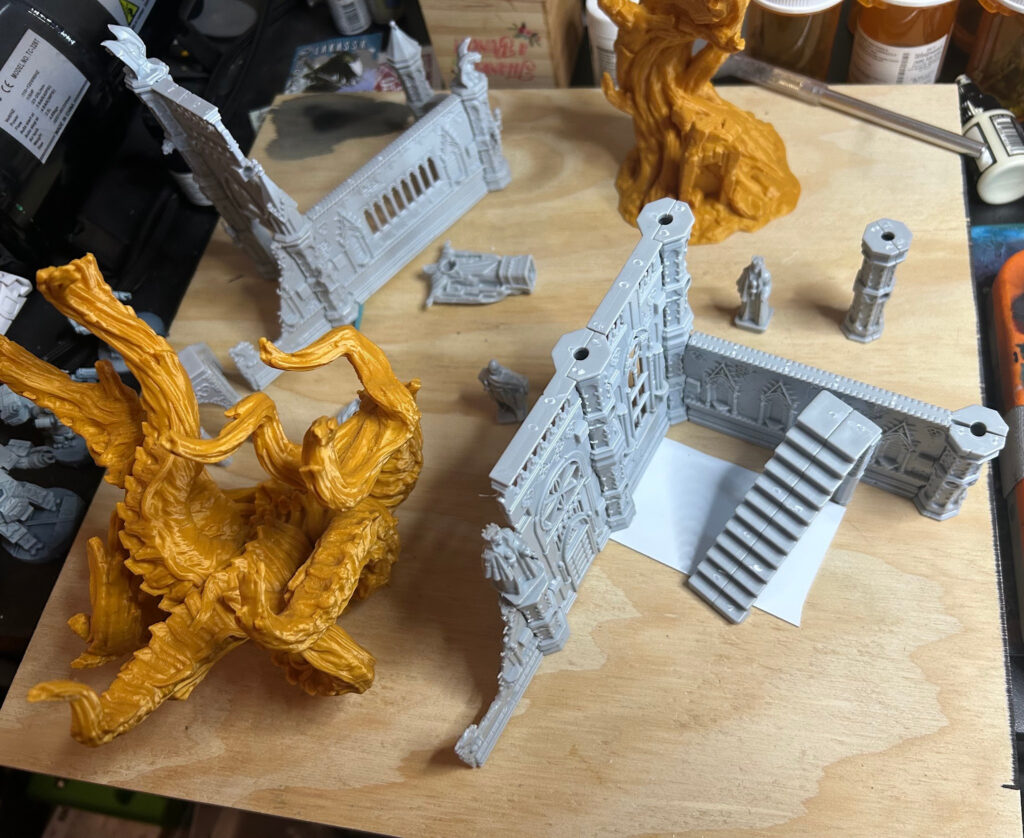
From there I grabbed my pieces and started iterating physically, by lining them up loosely on the board as you can see. Something I didn’t write down but I do have access to for building material is a lot of insulation and packing foam that I plan to use to make the bulk of the height in the center. From there I can use aluminum foil and spackle to make it a more standard environment. I do plan to use some of my poster board to lay out flat spaces that I can put minimal texture on so that minis can sit flat since that was a failing of my previous map.
Now all I have to do is build and paint the damn thing. This’ll be something that I work on and off for the month of October ahead of Necropolis at Valhalla 2 so stay tuned.